

Field NOTES #005: compact risks
GRAILS doesn’t sell CDs.
This occasionally requires an explanation.
We sell records, obviously. We sell cassettes. There’s apparel, books, and enough music-adjacent merch scattered around the shop that the absence of one of the most successful recording formats ever devised can appear conspicuous.
Firstly, allow me to plainly state that vinyl is not a perfect medium. The format imposes physical limitations that digital recordings do not. Bass and playing time are hefty considerations. A poorly cut record can sound considerably worse than a well-mastered CD, and much of the music pressed to vinyl today began its life as a collection of ones and zeroes anyway. A critically acclaimed project is as likely to leap from a dorm-room laptop to a SoundCloud account as it is to be recorded at Electric Lady. Anyone insisting that vinyl is categorically more faithful to an artist’s original recording is making an argument the science doesn’t support.
Fortunately, that’s not at all how I’ve arrived at my decision not to sell compact discs. Sound is only part of what makes an album an album.
Of the formats we’ve devised to sell recorded music, the LP remains its most complete physical expression. Twelve inches gave artists and designers room to make an argument before the needle ever touched the groove. Typography and photography were critical decisions. Liner notes, credits, inner sleeves, inserts, sequencing, even the interruption required to turn the record over became part of the encounter. Behind all of it sat another chain of decisions: mastering, lacquer cutting, plating, pressing. By the time an LP reached a consumer’s hands, an extraordinary number of people had participated in translating recorded sound into an object.
The CD preserved much of that, but shrank it to five inches. More importantly, it lowered the cost of producing the object without anything approaching a proportional reduction in what consumers were asked to pay for it.
That part tends to disappear beneath all the nostalgia. When compact discs first arrived, their expense could reasonably be attributed to new technology. Manufacturing capacity was limited, equipment was expensive, and economies of scale had yet to materialize. As the format matured, however, production costs fell dramatically without producing a comparable reduction at the cash register. By the early 1990s, CDs could cost well under a dollar to manufacture in sufficient volume while consumers routinely paid well into the teens for the finished album.
Artists had considerably more reason to pay attention to the arithmetic. Recording contracts varied enormously, but CDs could be subjected to deductions specifically justified by the format itself. Packaging deductions reduced the royalty base, while so-called “new technology” provisions could reduce it further. A cheaper object therefore did not necessarily mean a cheaper album for the person buying it, nor did the savings necessarily accrue proportionately to the person whose name appeared on its cover.
This is where my objection to the compact disc begins to extend beyond aesthetics. Record companies had found a format that became increasingly inexpensive to manufacture, could be sold at a healthy premium, and gave them the enviable opportunity to resell enormous portions of their existing catalogs to people who already owned the music.
And buy it again we did.
The CD was hardly a confidence scheme disguised as a drink coaster. It was an impressive piece of technology that offered genuine advantages. CDs were smaller and considerably more portable than LPs, with longer playing times, negligible surface noise, and immediate track selection. They were particularly useful for classical music and became extraordinary vehicles for archival releases, box sets, reissues, and recordings that might otherwise have remained prohibitively scarce.
People had perfectly good reasons for liking CDs. Entire record collections were replaced with them. Albums already sitting in millions of homes were purchased again, now promising cleaner sound without the pops, scratches, warps, or indignity of getting off the sofa every twenty-two minutes. Vinyl sections contracted, pressing plants disappeared, and records were hauled into basements, attics, thrift stores, and yard sales with a haste that now seems almost comical.
There is, of course, a cassette rack inside GRAILS, which complicates my righteous indignation somewhat.
Cassettes compromised nearly everything I’ve just spent several paragraphs praising about records. The artwork became tiny. Fidelity suffered. Tape hiss came standard. A sufficiently hungry deck could turn your favorite album into linguine. What cassettes offered in return, however, was unmistakable: portability at a time when recorded music was still largely tethered to the room in which the stereo lived. Just as importantly, cassettes helped foster a subculture in which I, and countless others, embraced our inner Radio Raheem, shouldering a boombox (or, ahem, Ghetto Blaster) through the neighborhood with every intention of fighting the proverbial power.
You cannot put an LP in your pocket, nor can you reasonably play one while walking down the street. Record players react poorly to potholes. Anyone attempting to install a Technics SL-1200 in the dashboard of a Honda Civic has misunderstood both products. The cassette allowed recorded music to leave the living room, whether tucked into a Walkman, stacked in a glove compartment, or rattling around a shoebox hastily packed for a road trip.
The compromise was obvious. You sacrificed some fidelity and ceremony in exchange for mobility. Even the shortcomings occasionally produced something worthwhile. Blank tape transformed the listener into an amateur programmer, capable of recording an album, taping something off the radio, or spending an unreasonable amount of time deciding whether the person they had a crush on would understand what track three on Side B was trying desperately not to say outright.
The cassette never needed to replace the LP at what the LP did best. It had another job.
The compact disc eventually assumed that job, too, but portability alone doesn’t explain why I regard it differently. The more consequential distinction was hiding beneath the reflective surface all along: the music was digital.
For years, this meant relatively little to the average person buying a CD. You inserted the disc into a player, pressed play, and music came out. The ritual remained recognizable enough. There was still an album to purchase, artwork to inspect, a booklet to unfold, and a shelf on which the thing would eventually live. Whatever technological revolution was taking place remained safely contained inside a jewel case.
Then the computer learned what to do with it.
A CD inserted into a computer could emerge as something entirely different. The jewel case remained on the shelf while its contents moved onto a hard drive, an iPod, or eventually a file-sharing network. Recorded music no longer needed to travel with the object manufactured to contain it. The album could be duplicated well enough for ordinary purposes, transported around the world in moments, and accumulated in quantities no bedroom shelving system could reasonably accommodate.
The compact disc did not invent music piracy. It did not invent compression, broadband internet, peer-to-peer networks, or the MP3, and nobody developing the format decades earlier can reasonably be blamed for failing to anticipate Napster, LimeWire, iTunes, or Spotify. Technological history is rarely tidy enough to assign one culprit.
Still, the CD helped normalize a consequential distinction between an album and the object containing it.
Once that distinction became ordinary, the subsequent progression required considerably less imagination. We bought discs and ripped them onto computers. Soon we could purchase the resulting files directly, or download them without purchasing them at all. Eventually, even storing the files began to feel unnecessarily cumbersome. Why fill a hard drive when someone else’s server could hold nearly every recording imaginable?
Streaming was not the inevitable consequence of the compact disc. It was, however, remarkably compatible with the lesson we’d already learned from it: what mattered most was access to the recording. The object surrounding it could eventually be discarded.
Consumers benefited enormously from this progression, which is partly why objections to it can sound hopelessly nostalgic. Music became cheaper to access and almost impossibly easy to find. A teenager with a phone now has immediate access to recordings that collectors once spent decades and considerable sums trying to locate. I run a record store built partly around music that modern technology allowed me to discover long before I ever encountered an original pressing. Pretending otherwise would be ridiculous.
The benefits are real. So are the consequences.
Recorded music has moved from a physical object we owned to something many listeners no longer possess in any meaningful sense. Along the way, the amount of music available to the average listener became nearly infinite while the individual recording became increasingly difficult to value as anything more than another selection awaiting a tap.
That matters to me more than whether I can hear a little surface noise.
It also explains why the current vinyl resurgence leaves me with mixed feelings. Records have returned to department stores, big-box retailers, bedrooms, dorm rooms, and social-media feeds, but not necessarily for the same reasons they once occupied nearly every home stereo. For some listeners, vinyl represents a genuine return to physical engagement with music. For others, the record is merch: an oversized souvenir available in six colors, sometimes purchased without any particular urgency to own the equipment required to hear it. Scarcity and speculative resale values have further complicated the proposition. An object whose survival I celebrate can still be reduced to something I find considerably less interesting.
Perhaps that’s why the cassette doesn’t bother me and the CD does. The cassette compromised the album because people wanted to take music somewhere the record couldn’t go. The CD arrived promising to improve the album itself and, in many measurable respects, succeeded. What followed was an increasingly efficient separation of recorded music from nearly everything surrounding it, including the requirement that we own it at all.
I don’t blame the compact disc for everything that followed. That would require ignoring too much history and granting a five-inch piece of polycarbonate considerably more agency than it deserves.
I simply don’t feel compelled to give it shelf space.
Field NOTES #004: Pretentious Records
Though still in our nascent stages, GRAILS has developed a reputation for having rare, or “interesting,” records.
I’ve cautiously accepted the compliment, if and when that’s the presumed intent, though I’m not entirely sure Interesting Records is the dba I’d hoped for.
Along with curious glances over the bins and across the counter come the occasional exchanges:
Peruser (carping): “Is everything new?”
Me: “No. Roughly half the records are used. I am, however, rather particular about what ‘used’ is allowed to look like.”
Often followed by:
Peruser: “Do you have any… classic stuff?”
Me: “We do. Quite a lot of it, actually.”
The evidence to the contrary, admittedly, can be difficult to ignore. On any given afternoon, the shop might reveal pressings of Clics Modernos, Wahdon, Lô Borges, Neuromantic, Miss Perfumado, Open & Close, Est... Folle, Alles Ist Gut, and any number of records capable of stopping someone mid-flip.
Peruser: “What is this?”
Me: “Ah.”
How I elect to answer depends entirely on who’s asking, which usually requires a few questions of my own.
“This” could be something they’ve spent years searching for, something they’ve only ever streamed and are seeing in the wild for the first time, or something entirely unfamiliar that arrested their thumb halfway through one of the peculiarly labeled bins they’re still trying to make sense of. All three happen with surprising regularity.
It could also simply be an album with intriguing cover art.
It’s the “entirely unfamiliar” peruser that tends to deem GRAILS a home for the unusual.
Spend enough time in American record stores and certain albums begin to feel like municipal requirements. Kind of Blue. The Dark Side of the Moon. Led Zeppelin IV. Ziggy Stardust. Thriller. Nevermind. Abbey Road. Songs in the Key of Life. Hotel California. (Just as common is spotting a disheveled copy of Whipped Cream & Other Delights at a local Goodwill.) None of these requires an explanation. Nobody pulls Rumours from a bin and wonders what sort of record store would carry such a thing.
Nor should they.
These are extraordinary records. GRAILS carries them. Over the years, I’ve owned countless variants, many of which have followed me through apartments, cities, and relationships.
The trouble begins when familiarity becomes the boundary rather than the foundation, because there is no neutral version of a record store.
Every independent shop reflects somebody’s taste. Sometimes that taste announces itself from the walls. Sometimes you have to dig for twenty minutes before the autobiography reveals itself. Either way, somebody chose what to buy. What to pass on. What belonged on the wall and what belonged nowhere near the building.
GRAILS is no different. My musical map simply covers a lot of “unusual” ground.
A love for Rosinha de Valença led me deeper into Brazil long before Clube da Esquina became requisite listening. Close familial ties to Bahia ensured I didn’t stop there. Early discovery of El Flaco ensures that Argentina is impossible to relegate to a mere footnote. A long-ago ex opened Japan well beyond the borders city pop would later make algorithmically fashionable. Travel throughout Africa made the absurdity of reducing fifty-plus countries and thousands of musical traditions to a single “World” bin difficult to ignore. Close friends brought Fairuz into my life without the need for a Western analogue to explain her canonical significance.
None of this strikes me as particularly adventurous. Music has been traveling for as long as people have. Sometimes willingly. Sometimes under circumstances considerably less benign.
People move and take music with them. The music changes along the way. Sounds, rhythms, languages, and traditions that once seemed geographically distant find themselves sharing the same room, and something new emerges.
Eventually someone presses the result onto a record. Then that record travels, too.
This is how supposedly distant musical traditions keep turning up in one another’s family trees. A record made in Lagos finds an audience in London. Jamaican sound-system culture absorbs influences from New York and, later, helps reshape music there in return. Brazilian records alter the ears of musicians thousands of miles away. Japanese players absorb American jazz, R&B, and fusion before returning something sufficiently distinct that American collectors spend decades hunting it down.
The bins merely follow the evidence, which tends to make GRAILS look eclectic. A term that, in certain homogeneous circles, can sound less like a compliment than intended.
A visitor accustomed to record stores organized around a largely American and British rock canon may reasonably wonder why a Cape Verdean record they’ve never encountered occupies wall space beside an album they’ve known since childhood. Another may be delighted to find Francis M without having to search beneath a category broad enough to contain most of the planet. Someone else just wants a clean, original pressing of Rumours.
All of them should be able to shop here.
Obscurity, however, has its own peculiar cachet among record collectors. Knowing the record nobody else knows can become a personality remarkably quickly. So can owning the pressing nobody else can afford. Add enough catalog numbers, matrix variations, private pressings, and confidently mispronounced surnames and record collecting can become competitive trivia with furniture.
I’m not especially interested in that.
A rare record isn’t necessarily a good one; in some cases, that may explain why it’s so hard to find. Scarcity can tell you how many copies survived. It cannot tell you whether anyone should care.
The records that interest me tend to have another quality: They meant something to me.
That’s the funny thing about calling music “obscure.” Often what we really mean is obscure to us.
A record can sell hundreds of thousands of copies in another country, soundtrack an entire generation’s adolescence, influence musicians for decades, and still arrive in an American record store carrying the faint aura of an archaeological discovery.
It wasn’t hiding; we simply weren’t looking where it lived.
That realization has shaped GRAILS more than rarity ever could.
There are records in the shop because they are canonical. Others because they should be heard again. Some because their influence is easier to find than the music that produced it. Some because migration carried them from one community to another until nobody could say with much confidence where one genre ended and another began.
Most are here because I love them. The rest because I respect them.
That may be the least pretentious explanation of all.
What happens once they’re in the bins is largely out of my hands.
Maybe customers exit with exactly what they came for, a record they’ve been hunting for eons. Maybe they leave with something whose title they couldn’t pronounce when they entered (and can pronounce only a tad better than before).
Or maybe they put it back and storm out in a huff.
That’s allowed, too.
The inventory isn’t a prescribed reading list.
Which brings us back to the accusation embedded, however gently, in that question:
“Do you have any… classic stuff?”
Of course.
The disagreement, if there is one, concerns who decides what gets called classic.

FIELD NOTES #003: Why New Haven?
“Why New Haven?”
It’s the question I’ve answered more than any other since opening GRAILS.
Not, “Why a record store?” That answer usually satisfies itself within a few minutes of walking through the door.
“Why… here?”
The implication is rarely malicious. Sometimes it’s genuine curiosity. Other times it arrives wrapped in disbelief. The assumption, however, is almost always the same: if you’re going to build the sort of record store that aspires to become a destination, why wouldn’t you do it in New York? Or Boston? Or Seattle? Or DC? Somewhere with a larger population. More tourists. An established music scene. A thriving economy. More certainty.
It’s a fair question.
One that I considered. Over and over… and over.
Connecticut occupies an unusual place in the American imagination. It sits between two of the country’s great cultural capitals while rarely being mistaken for one itself. For many, it’s less a destination than a stretch of Interstate 95 separating one from the other. New Haven enjoys a reputation built largely on two institutions: Yale University and apizza. One has shaped the city’s intellectual identity. The other its culinary one. Both deserve their flowers. Neither fully explains the place.
Spend enough time here and another story emerges.
You’ll hear about the graduates who leave because opportunity seems easier to find, and more lucrative, elsewhere. Musicians who grow impatient with the scene and relocate to places where infrastructure already exists. Friends who disappear when opportunities to make long-held dreams of moving to Manhattan possible. Before long, you begin to realize Connecticut has become remarkably fluent in the language of elsewhere.
I heard those stories before signing the lease, and still hear them. What surprised me wasn’t hearing them. It was how quickly I found myself repeating them.
It would’ve been easier to open GRAILS somewhere else. I still believe that. Some days, I believe it more than others.
That’s an uncomfortable thing to admit publicly because it sounds like a judgment on New Haven, and it isn’t.
It’s simply an acknowledgment that building something independent has become increasingly difficult, particularly when independent record stores are no longer competing only with one another. They’re competing with online retailers, exclusive variants, direct-to-consumer releases, algorithms granting readymade access to lossless audio, and big-box stores capable of turning vinyl’s resurgence into economies of scale neighborhood shops simply can’t match. The romance surrounding records has returned. Much of the commerce hasn’t.
The places I’ve always admired were never the obvious American music hubs: New York, Austin, and Nashville. They were the smallish, IYKYK scenes in Athens, Lawrence, Ann Arbor, and Denton. College towns that became destinations among artists, musicians, and record collectors after accumulating the kinds of institutions that reward curiosity. Independent record stores. Fearless college radio. Small venues introducing tomorrow’s headliners long before anyone else knew their names. Local labels with a yesteryear indie ethos. Communities where culture isn’t simply consumed, but participated in.
None of those places arrived fully formed. Every music city was once simply a place people lived that few outside of it had heard of. New Haven already possesses many of the same raw materials: historic venues, college radio, universities, artists, and a steady influx of young people arriving each autumn looking for something to belong to. Its heartbeat simply hasn’t reached full strength.
One record store doesn’t create a music scene any more than one venue, one band, or one gallery. At best, it becomes part of an ecosystem generous enough to make the next person or collective believe there’s room to contribute something of their own.
What keeps me here has changed. When I signed the lease, I thought mostly about records. Now I think about people.
I pretend not to notice a Co-Op student pull an album from a bin because of something we talked about in passing. Up to that point, they’d simply wandered in with friends after school while waiting for a ride home.
A medical student returns the following week to tell me they’ve been studying to Speak No Evil. Adding that Felt Mountain has quietly become the soundtrack to their walks to class.
A transplant mentions they’ve started saving for a turntable they didn’t know they wanted until they walked through the door, then asks where they should begin.
Those moments help keep the lights on. Just as importantly, they remind me why I wanted them on in the first place.
And every morning.
I still don’t know whether opening a record shop in New Haven will prove to have been the right decision.
I suspect that’s the sort of question only time can answer.
What I do know is that every place I’ve ever admired became what it is because people before me decided to add something they wished already existed.
Long before I was ever asked “Why New Haven?,” countless artists, musicians, writers, shopkeepers, and entrepreneurs had already begun answering that question in their own way. I’m simply looking after one small corner of a conversation that began long before GRAILS and, I hope, continues long after me.
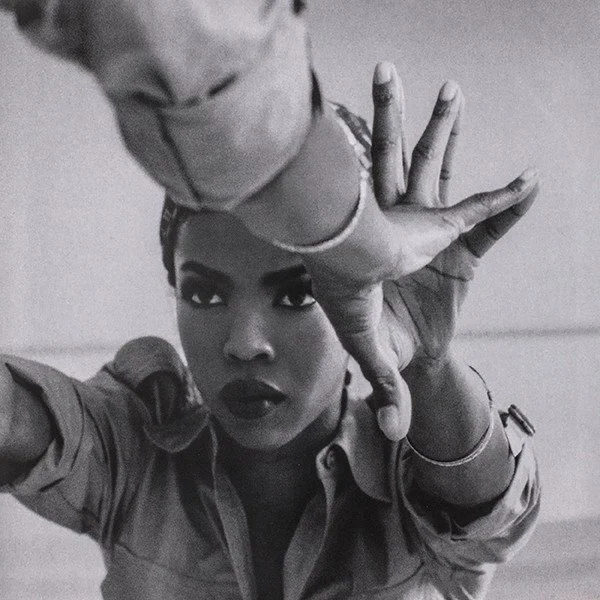
FIELD NOTES #002: Zoomers v. ‘The Miseducation of Lauryn Hill’
Every few weeks, The Miseducation of Lauryn Hill is pulled from a bin in the shop and flippantly castigated as overrated. The declaration is almost always prefaced with the same disclaimer:
“Hot take...”
The statement usually comes from someone born well after the album's release. They’re not dismissing Lauryn Hill outright. They’re questioning the weight the record continues to carry. How, they ask, can an artist with one proper studio album occupy so much space in conversations about greatness? About GOATness?
It’s a fair question.
For listeners who discovered The Miseducation of Lauryn Hill in 1998, the album arrived as an event. It dominated radio, blurred the lines between rap, R&B, and soul, and became one of the defining statements of an era already reshaping Black popular music. More importantly, it synthesized traditions that had been evolving for decades. Sylvia Robinson had already taken the commercial gamble that helped make recorded hip-hop possible. Mary J. Blige had rewritten the language of contemporary R&B by marrying hip-hop’s grit with soul's emotional vocabulary. MCs like Medusa had long demonstrated that women could rival, and often surpass, their male counterparts in technical dexterity and lyrical ambition, even if history has been slower to acknowledge it. Lauryn Hill didn't invent any of these ideas. She brought them together in a way that felt both inevitable and revolutionary.
Its reputation wasn't built overnight. It grew alongside the memory of hearing it everywhere: in cars, barbershops, dorm rooms, family cookouts, and record stores.
Most Zoomers encountered it differently. They inherited it as a consensus pick. Before hearing a single note, they were told it was essential. A masterpiece. One of the greatest albums ever made.
That’s a difficult introduction for any record.
Masterpieces rarely get the luxury of being heard without expectation. By the time younger listeners arrive at Miseducation, they’re also hearing nearly three decades of rankings, retrospectives, and reverence. Sometimes the reaction isn’t really to the music. It's to the pressure surrounding it. The feeling that you're supposed to hear something transcendent.
In my experience, “overrated” rarely means “bad.”
More often it means, “I don't hear what everyone else insists is there.”
That’s a worthwhile place to begin. Every generation should question the canon it inherits. The interesting part is what survives that scrutiny.
Listen to the qualities we celebrate in contemporary artists: emotional transparency, the refusal to separate singing from rapping, and albums rooted in Black interiority without apology. Lauryn Hill didn't invent those ideas, either. But Miseducation gave them one of their defining popular expressions. Long before vulnerability became the dominant currency of contemporary R&B, Hill had already made it central to one of the most commercially successful albums of its era. You can hear its DNA in A Seat at the Table, in the diaristic songwriting of Jazmine Sullivan and SZA, and in the countless artists who have refused to separate technical virtuosity from emotional candor.
Then again, maybe none of this is new.
I sometimes wonder if twenty-year-olds in the late 1980s looked at Marvin Gaye’s What’s Going On the way some twenty-year-olds look at Miseducation today: as a record everyone older than them insisted they had to love.
Every generation inherits its masterpieces.
Every generation decides, at least for a while, whether to believe the hype.

FIELD NOTES #001: Who Plays Chess in a Record Store?
On its face, chess is a finite game. Sixty-four squares. Thirty-two pieces. Perfect information. Chance has remarkably few places to hide. No cards to count. No loaded dice. No weather to contend with. Precious little room for the kind of beginner's luck that occasionally humbles even an expert player. In chess, there is no “Miracle on Ice” or Maracanazo.
Buster Douglases don’t beat prime Mike Tysons.
Within the narrow confines of a chessboard lives a universe with rules that can be learned in an afternoon and a game that cannot be fully mastered in a lifetime. This is less a testament to the game’s complexity than to the inexhaustibility of the human mind. Whether played with maple Bauhaus pieces atop a marble plinth or worn plastic pieces on a folding table, every game begins from precisely the same position. The same army. The same checkered terrain. The same objective. By all appearances, there is almost nothing left to discover, so long as you know the rules.
And yet no two games have ever been the same. Not once.
For more than fifteen centuries, queens and carpenters, mathematicians and mechanics, poets and prisoners have reached across the same sixty-four squares. Every opening has been named. Every defense mapped. Every gambit analyzed, abandoned, rediscovered, and analyzed again. Libraries have been written about positions that differ by a single pawn. Machines now calculate more deeply than any human being ever will, yet the game remains stubbornly human. The mysteries have never belonged to the pieces. They’ve always belonged to us.
Chess has an uncanny way of revealing how differently we think from how we imagine we think. Every player believes they are evaluating the position. More often, they are defending ideas.
A promising attack becomes difficult to abandon once you’ve spent twenty minutes convincing yourself it should work. The board recognizes no such investment. Every move changes the value of every other move. Fat Joe da Grandmasta would likely proffer that “yesterday’s evaluation is not today's evaluation.”
There are conversations from years ago you can still replay word for word. Jobs accepted for reasons that seemed perfectly sensible until they weren’t. People you should have called. Others whose names, in retrospect, should have read Do Not Answer. Then comes the strangest part. Looking back, the right decision often appears so obvious it becomes difficult to imagine making any other.
Memory performs a curious act of forgery: it edits uncertainty out of the past.
Erase everything that follows. Remove every lesson, every disappointment, every success, every warning that only time could provide. Return to that exact afternoon with the same hopes, the same fears, the same incomplete understanding of the world. There is every chance you would make the same decision again.
Most mistakes aren’t rooted in stupidity. They are a byproduct of chronology. You simply hadn’t met the person you were about to become.
Chess offers no escape from that truth. Every position is as ignorant of the future as the player creating it. The board has no capacity for forgetting. Every move remains present. Nothing quietly disappears. Nothing politely fades into a black-and-white background. A concession made on move eight may not collect its debt until move twenty-six because the board is infinitely patient.
Perhaps that explains another curious habit of the game: we are forever tempted to evaluate the player before they’ve made a single move.
Despite centuries of evidence to the contrary, we continue to believe intelligence has a look. That discipline has a posture. That mastery has a symmetrical face and impossibly small pores.
Chess is almost uniquely indifferent to all of it.
There is no preferred age at which brilliance announces itself. No favored sex. No prescribed race, religion, nationality, political persuasion, occupation, income bracket, education, height, weight, or social standing. There is no handshake that predicts a middlegame. No tailored jacket that guarantees an endgame. No résumé that improves a position by so much as a single tempo.
Every piece answers to the same rules regardless of who reaches for it, and the first move abolishes biography outright.
The board cannot distinguish youth from age, wealth from poverty, confidence from uncertainty, reputation from anonymity, Magnus Carlsen from you or me. It sees only the decisions already made and the possibilities they have created. Whatever advantages, real or imagined, a player brings to the table must eventually survive contact with the board. Many do not. Every assumption carried into the game is tested. When necessary, abandoned. The board concerns itself only with what is, never with what’s hoped for.
It is perhaps no coincidence that chess has long attracted remarkable minds. More than extraordinary intelligence, the game rewards a particular disposition toward the world. That, or a László Polgár-esque father figure determined to prove a point.
To play chess is to become comfortable revising your own conclusions. Every move asks the same uncomfortable question: Knowing what you know now, would you still make the same decision? The answer changes more often than our pride would like to admit.
Music asks much the same.
Provided, of course, it is listened to rather than merely heard. Sidney Deane argued as much to Billy Hoyle. Strip away the bravado, the stereotypes, and the Hollywood framing, however, and the underlying observation has endured. Listening, like chess, is an act of sustained attention. The first impression is seldom the last and almost never the most rewarding. The records that stay with us rarely reveal themselves all at once.
A great record rarely surrenders itself on first acquaintance. More often, it begins as a slow-building crush before quietly becoming something indispensable. The way in is different for everyone. For some, it’s an aching harmony that catches the ear and settles somewhere deep enough to become inseparable from a particular season of life. For others, it’s a bass line that refuses to let the body remain still. Every so often, it’s a lyric you’ve sung for years before realizing life had quietly grown you into it. The finest albums, like the most awe-inspiring games of chess, continue revealing themselves long after the first encounter. Before long, an I–V–vi–IV chord progression can feel every bit as familiar as an e4 King’s Pawn opening. Eventually, both stop feeling like foreign notation and become languages you no longer need to translate.
That is why there is a chessboard in the middle of the store.
Chess players don’t naturally buy records, nor do record collectors inevitably find their way to chess. The Venn diagram isn’t especially crowded. That’s never really been the point. Painstakingly curated bins of records and a chessboard ask the same thing of us.
Stay a little longer.
Resist the temptation to mistake familiarity for understanding.
Accept that the second look is often better than the first.
There was a time when nearly every town had places where lingering required no explanation. Record stores were among them. You came in looking for one thing and somehow left talking about another. An album became a recommendation, and the recommendation came with a story. A story became an engrossing conversation. Every so often, a conversation became a friendship that outlasted the record that started it. The transaction was almost incidental, despite becoming the reference point for everything that followed. You walked out carrying more than whatever masterpiece you’d tucked beneath your arm.
Then efficiency came, as it is wont to do.
Curiously, after all these years spent shaving seconds from every task imaginable and granting access once thought impossible, many of us seem to have forgotten what we were planning, or hoping, to do with all the time and energy we’re supposedly saving.
Outside GRAILS’ walls, attention has become the commodity everyone seems determined to extract: enter, buy, exit, come again. Recommendations arrive before curiosity has had the chance to form. Algorithms flatten surprise and become increasingly confident they know what we’d like before we’ve had the opportunity to discover it for ourselves. Convenience has become so persuasive that it occasionally disguises itself as discovery.
Inside the shop, the pace is different. Nobody hurries you.
Pull a record you’ve never heard, or one you’ve yet to cross off your ever-growing must-listen list. Turn it over. Read the credits. Linger over the names you do and don’t recognize, a reminder of just how many hands can shape a single record. Ask the stranger beside you why they reached for the album they’re holding. If a vacated game or one yet to begin is waiting on the chessboard, make a move.
The room has a way of taking over from there.
The world outside remains exactly where you left it. The bills still need paying. Tomorrow’s obligations aren’t going anywhere. For an hour or two, though, they lose their habit of demanding to be the only thing worthy of your attention. The music fills the spaces conversation leaves behind. The board fills the spaces silence otherwise would. They’re just excuses, really.
The room is the point.